Overview
Electric Power
Specifications
| Maximum Continuous Rating | 2000 ekW @1.0pf |
| Fuel Type | Natural Gas, Biogas, Coal Gas |
| Maximum Electrical Efficiency | 43.70% |
| Maximum Continuous Rating | 2000 ekW @1.0pf |
| Fuel Type | Natural Gas, Biogas, Coal Gas |
| Maximum Electrical Efficiency | 43.70% |
Benefits & Features
High Efficiency, Lower Operating Costs
- Miller cycle timing with combustion chamber and spark plug improvement help on saving up to 15% fuel gas per year
- CG170 (non-miller) is optimized for Island-Mode capability
- Gearbox helps limit wear and tear on engine components, lowering operating costs and increasing availability
Low installation, Building and Operating Costs
- Extended maintenance intervals thanks to sooth-free combustion and enlarged oil tank
- Low fuel consumption due to improved combustion chamber and pre-chamber spark-plugs
- Flexible fields of application also with fluctuating gas qualities due to Total Electronic Management (TEM)
- Optimized oil management
Optimized Lubrication Consumption
- Consumes up to 1900 liter less lube oil per year than comparable models<\li>
- Longer lubricant change and oil change intervals<\li>
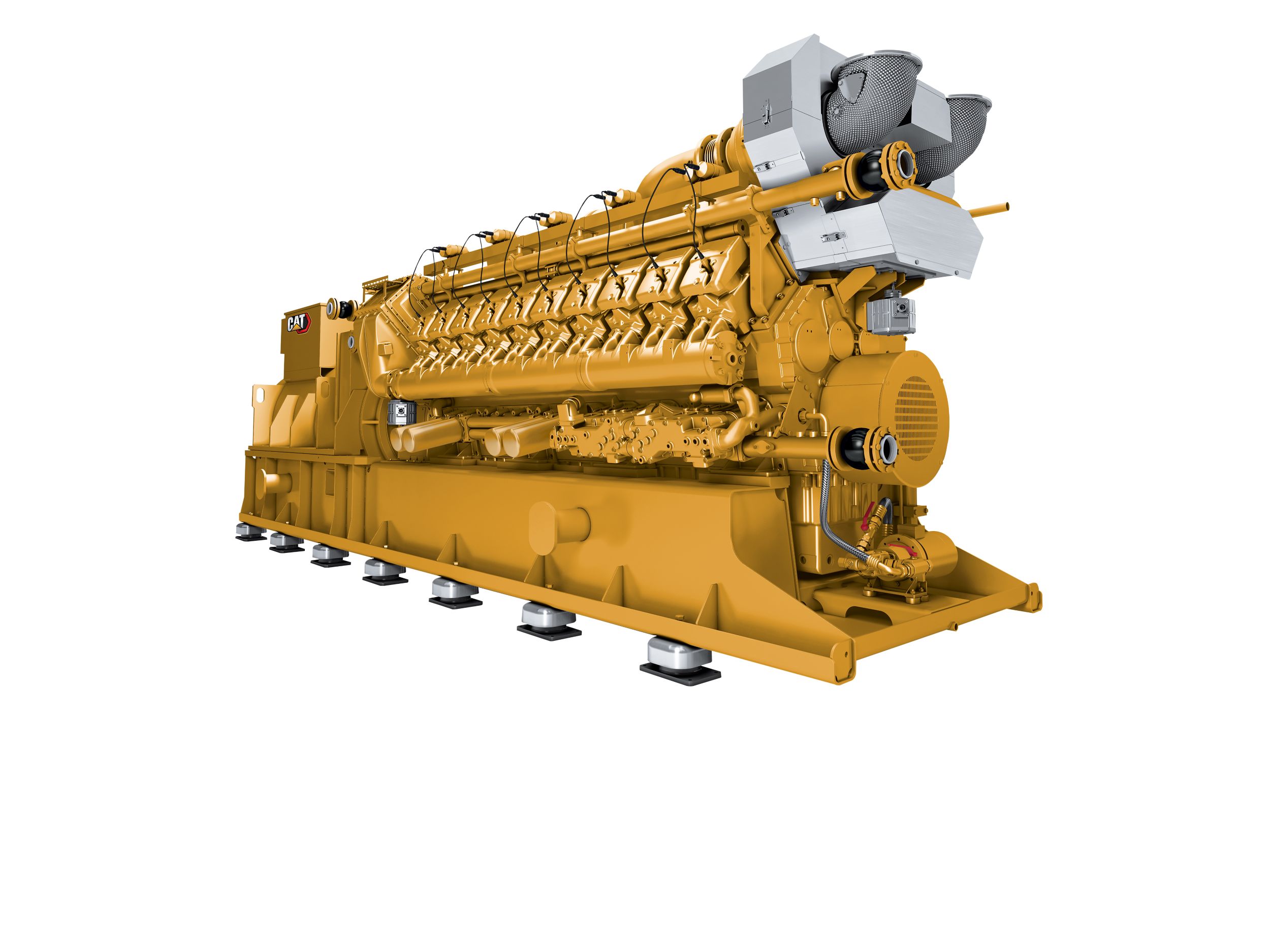
Specifications
| Maximum Continuous Rating | 2000 ekW @1.0pf |
| Fuel Type | Natural Gas, Biogas, Coal Gas |
| Maximum Electrical Efficiency | 43.70% |
| Maximum Standby Rating | 2000 |
| Frequency | 50 / 60 Hz |
| RPM | 1500 |
| Engine Model | CG170-20 |
| Displacement | 3240 in³ |
| Aspiration | TA |
| Bore | 6.7 in |
| Stroke | 7.7 in |
| Length | 294 in |
| Width | 67 in |
| Height | 86 in |
| Dry Weight - Genset | 43651.1 lb |
| Maximum Continuous Rating | 2000 ekW @1.0pf |
| Fuel Type | Natural Gas, Biogas, Coal Gas |
| Maximum Electrical Efficiency | 43.70% |
| Maximum Standby Rating | 2000 |
| Frequency | 50 / 60 Hz |
| RPM | 1500 |
| Engine Model | CG170-20 |
| Displacement | 53.1 l |
| Aspiration | TA |
| Bore | 170 mm |
| Stroke | 195 mm |
| Length | 7467.6 mm |
| Width | 1710 mm |
| Height | 2190 mm |
| Dry Weight - Genset | 19800 kg |
Benefits & Features
High Efficiency, Lower Operating Costs
- Miller cycle timing with combustion chamber and spark plug improvement help on saving up to 15% fuel gas per year
- CG170 (non-miller) is optimized for Island-Mode capability
- Gearbox helps limit wear and tear on engine components, lowering operating costs and increasing availability
Low installation, Building and Operating Costs
- Extended maintenance intervals thanks to sooth-free combustion and enlarged oil tank
- Low fuel consumption due to improved combustion chamber and pre-chamber spark-plugs
- Flexible fields of application also with fluctuating gas qualities due to Total Electronic Management (TEM)
- Optimized oil management
Optimized Lubrication Consumption
- Consumes up to 1900 liter less lube oil per year than comparable models<\li>
- Longer lubricant change and oil change intervals<\li>
Standard Equipment
- Air Inlet
- Turbocharger with a water-cooled bearing case for all cylinder
- One-element single-stage air cleaner with enclosure and sevice indicator
- Control Panels
- TEM (Total Electronic Management)
- Cooling
- Jacket water and SCAC thermostats
- flange connections for JW inlet and outlet
- Electrical jacket water and aftercooler coolant pump
- Exhaust
- Closed crankcase ventilation system
- PEARL/Low resistence exhaust system
- Exhaust waste gate for the CG170-20
- Fuel system
- Pre-chamber spark plugs
- Electronic fuel metering valve
- Independently controlled cylinder monitoring and ignition system
- Generator
- Winding temperature detectors
- 3-phase sensing and KVAR/PF control
- Reactive droop
- closed-coupled generator result in no torque transmission to the base frame
- grid code generator
- Anti-condensation space heater
- Busbar connections
- Starting/Charging
- 24V starting motors
- Battery disconnect switch
- General
- Crankshaft vibration damper and guard
Optional Equipment
- Cooling
- CHP skid
Related Products
Title
Lorem Ipsum is simply dummy text of the printing and typesetting industry. Lorem Ipsum has been the industry's standard dummy text ever since the 1500s, when an unknown printer took a galley of type and scrambled it
| 100 | 200 | # | # |
|---|---|---|---|
| 1 | # | 1 | # |